
How to choose a padel racket in 2026: a complete step-by-step guide
Choosing a racket is the most important equipment decision in padel. A racket that suits your game helps you improve faster and enjoy it more; one that doesn’t will make you miss shots you should win and can even punish your arm. In this guide we go through everything you need to look at, step by step.
1. Start with your level
This is the biggest factor. If you are starting out, look for a forgiving racket: round shape, large sweet spot, low balance and a soft feel. If you already play once or twice a week and have the basic shots, you can move to an all-round racket. Maximum-power rackets make more sense once your technique is solid.
- Beginner: control, comfort and handling.
- Intermediate: a balance between control and power.
- Advanced: the racket that best fits your particular style.
2. Shape: round, teardrop or diamond
The shape decides where the sweet spot is. A round racket has a large, centred one: more control and more forgiveness. A diamond racket moves it up towards the head: more power, but it demands more technique. The teardrop sits in between and is the most versatile. We explain it in detail in our guide round, teardrop or diamond racket.
3. Balance
Balance tells you where the weight is concentrated. A low balance (towards the handle) makes the racket easier to handle and faster at the net; a high balance (towards the head) gives more momentum and power on the smash, but tires the arm more.
4. Weight
Most adult rackets weigh between 355 and 380 grams. More weight gives stability and power; less weight gives speed and comfort. If you have elbow or shoulder discomfort, or want a more agile racket, look at the Light or Woman versions many brands offer.
5. Core and feel
The core is the rubber inside. A soft rubber absorbs vibrations better and gives the ball more exit speed on slow shots; a hard rubber responds better when you hit hard and gives more control at high speed. That is why professional rackets tend to be harder.
6. The face: fibreglass or carbon
Fibreglass is more flexible and comfortable; carbon is stiffer, more durable and adds precision. Within carbon you will see names like 3K, 12K or 18K, which we explain in this guide to carbon.
7. Your budget
You don’t need to spend the most to get a very good racket. Last season’s rackets or the mid-range versions of the big lines usually perform excellently at a much lower price. In our shop every racket is discounted from the RRP.
Want us to help?
Answer 6 questions in our “Find your racket” quiz and we will recommend the 3 rackets in stock that suit you best. And if you’d rather ask, Zoe, our assistant, will help you in the website chat.
Rackets you might like
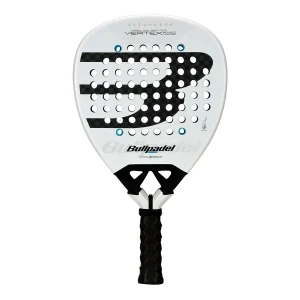
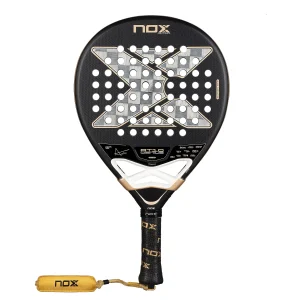
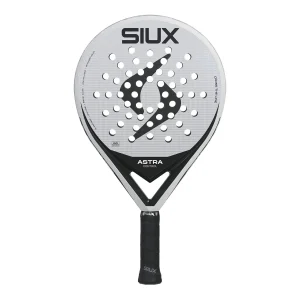

Not sure which one to choose? Take the “Find your racket” quiz or browse all rackets.