3K, 12K or 18K carbon in padel rackets: what it really means
You’ve surely seen it in the name of many rackets: 3K, 12K, 18K… That figure indicates how many thousand carbon filaments each thread used to weave the racket face contains. It is real technical data, but it’s worth understanding what it changes and what it doesn’t.
What the “K” means
A 3K weave uses threads of about 3,000 filaments; a 12K one, about 12,000; an 18K one, about 18,000. With thicker threads the weave changes its stiffness and the way it responds to impact.
How it affects play
- 3K: a finer weave and, in general, a more flexible feel with more control on soft shots.
- 12K: a very common middle ground in the high-end range, with a good balance between feel and response.
- 18K: thicker, stiffer weaves usually associated with a more direct response at high speed.
Note: a racket’s final feel depends on many things at once (the core rubber, the number of layers, surface treatments, the frame…). Two 18K rackets from different brands can feel very different. The “K” is a clue, not a rule.
Is more K better?
Not necessarily. More K doesn’t mean higher quality, just a different characteristic. For a beginner, fibreglass or 3K carbon may be more comfortable. An advanced player who hits hard can get more out of a 12K or 18K.
Examples in our shop
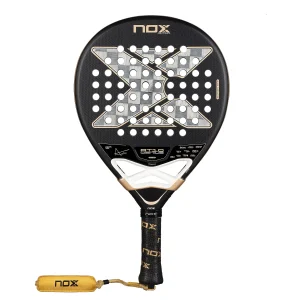
The Nox ML10 Ventus Control 3K 2026 (control-oriented), the Nox AT10 Genius Attack 12K 2026 or the Nox AT10 Genius 18K Alum 2026.
Not sure? Take the “Find your racket” quiz or ask Zoe, our assistant.
Rackets you might like

Not sure which one to choose? Take the “Find your racket” quiz or browse all rackets.